for Customer Feedback
CSAT survey software helps businesses measure how satisfied customers are after a specific interaction. TrustNinja's Email Signature Survey can create an ongoing feedback touchpoint in everyday communication, while its wider review-management tools help connect customer feedback with reputation activity.

Quick Answer
What Is CSAT Survey Software?
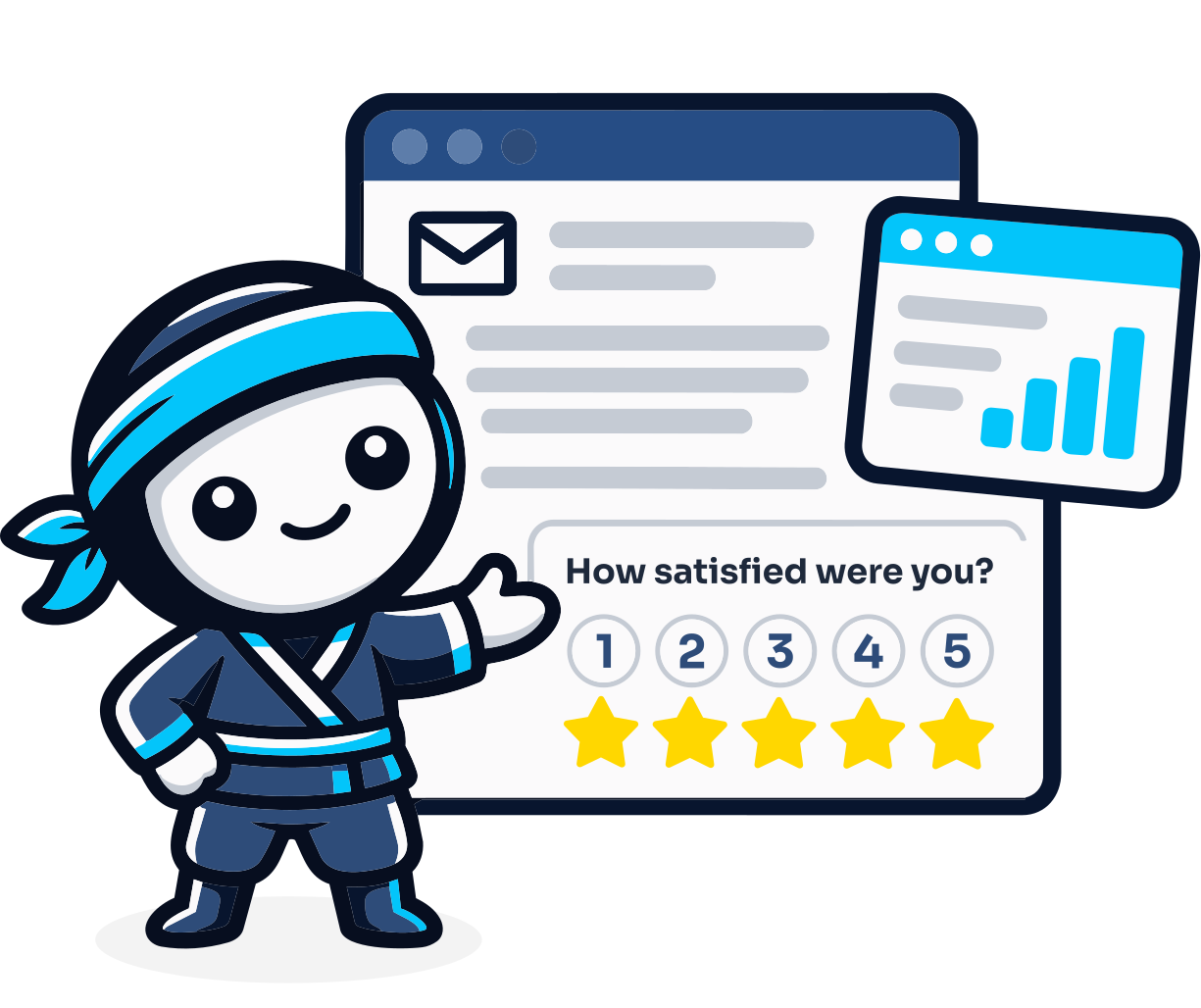
CSAT survey software collects customer satisfaction feedback after an interaction such as a support conversation, service appointment, purchase or stay. A typical CSAT question asks how satisfied the customer was and uses a simple rating scale. Businesses can use the responses to identify service patterns and improvement opportunities. TrustNinja's Email Signature Survey can support recurring feedback collection inside the emails your team already sends.

The Problem
Why Customer Satisfaction Is Hard to Measure Consistently
Businesses often receive informal compliments and complaints but lack a consistent method for capturing customer satisfaction at the right point in the journey.
Feedback is collected only when a customer complains.
Staff use different survey questions and timing.
Long surveys reduce the likelihood of completion.
Customer feedback sits separately from review-management activity.
Managers cannot easily compare recurring service themes.
Multiple teams or locations collect feedback differently.
A short, consistent question asked at the right moment turns scattered opinions into feedback you can act on.

Why It Matters
Why CSAT Feedback Matters
Measure Specific Interactions
CSAT is generally used to understand satisfaction with a recent service, support or transaction experience.
Identify Operational Friction
Repeated low-satisfaction feedback can highlight issues in service delivery, communication or customer support.
Create Faster Feedback Loops
Short surveys placed close to the interaction make it easier to collect feedback while the experience is still fresh.
Connect Experience and Reputation
Satisfaction feedback and public reviews are different signals, but together they give a clearer picture of customer experience.
How It Works
How a CSAT Survey Process Works
Choose the Interaction
Define the event that should trigger feedback, such as a completed service, support conversation, purchase or guest interaction.
Ask One Simple Question
Use a concise satisfaction question and a clear response scale that customers can understand quickly.
Place It at the Right Touchpoint
Use an appropriate email, email signature or other customer communication close to the measured interaction.
Review the Feedback
Look for recurring satisfaction patterns and comments rather than treating a single response as the whole customer story.
Improve and Repeat
Use feedback to refine the customer journey, then keep measuring the same interaction so results remain comparable.
The TrustNinja Solution
Collect Customer Feedback with TrustNinja
TrustNinja's Email Signature Survey provides a recurring feedback opportunity within everyday business communication. Its QR Code Feature and review-management workflow support additional customer touchpoints.
Email Signature Survey
- What it is
- A feedback prompt built into everyday business email.
- How it works
- Customers can rate their experience from a normal email interaction.
- Business outcome
- Creates a recurring opportunity to share feedback without a separate survey every time.
Customer Feedback
- What it is
- Structured input from customers about their experience.
- How it works
- Feedback is collected at consistent points in the customer journey.
- Business outcome
- Helps a business understand service strengths and recurring problems.
QR Code Feedback
- What it is
- Scannable feedback touchpoints for physical interactions.
- How it works
- QR codes can be placed on counters, receipts and printed material.
- Business outcome
- Extends feedback collection beyond email to in-person moments.
Review Invitations
- What it is
- A structured process for inviting genuine customers to share feedback or reviews.
- How it works
- Review opportunities are built into appropriate customer touchpoints.
- Business outcome
- Reduces reliance on staff remembering one-off requests.
Review Monitoring
- What it is
- An organised approach to keeping review activity visible.
- How it works
- Review and feedback activity is tracked in one place.
- Business outcome
- Helps teams respond and identify recurring customer themes.
Reputation Management
- What it is
- An ongoing process for collecting genuine feedback and monitoring public reviews.
- How it works
- Feedback, reviews and responses run as one repeatable process.
- Business outcome
- Connects private satisfaction feedback with your public reputation.

Who This Is For
Who Can Use TrustNinja?
CSAT-style feedback is useful wherever a business wants to measure satisfaction with a recent customer interaction rather than relying only on public reviews.
Customer Support Teams
Collect feedback after support interactions or issue resolution.
Service Businesses
Measure satisfaction after appointments, jobs or consultations.
Hospitality
Collect guest feedback at appropriate points in the stay or service journey.
Retail and E-commerce
Measure satisfaction after customer-service or purchase interactions.
Professional Services
Create a structured feedback point after suitable client engagements.
Multi-Location Businesses
Standardise satisfaction questions and timing across teams or branches.
Compare
CSAT Surveys vs Online Reviews
| CSAT Survey | Online Review | |
|---|---|---|
| Primary purpose | Measure satisfaction with a specific interaction | Share a public customer experience |
| Visibility | Usually private and internal | Usually public |
| Timing | Often straight after an interaction | Customer may review at any time |
| Format | Structured rating or question | Star rating and/or written review |
| Use | Operational service improvement | Reputation and customer decision context |
| Best approach | Ask consistently for defined interactions | Invite genuine, unbiased public feedback |
CSAT and online reviews both capture customer sentiment, but they serve different purposes. Use both, and keep public review requests neutral.
