for Practices
Build a more consistent patient-feedback and review process without making reputation management another manual front-desk task. TrustNinja can help dental practices create feedback opportunities through email and QR-code touchpoints while keeping privacy and professional standards central to the workflow.
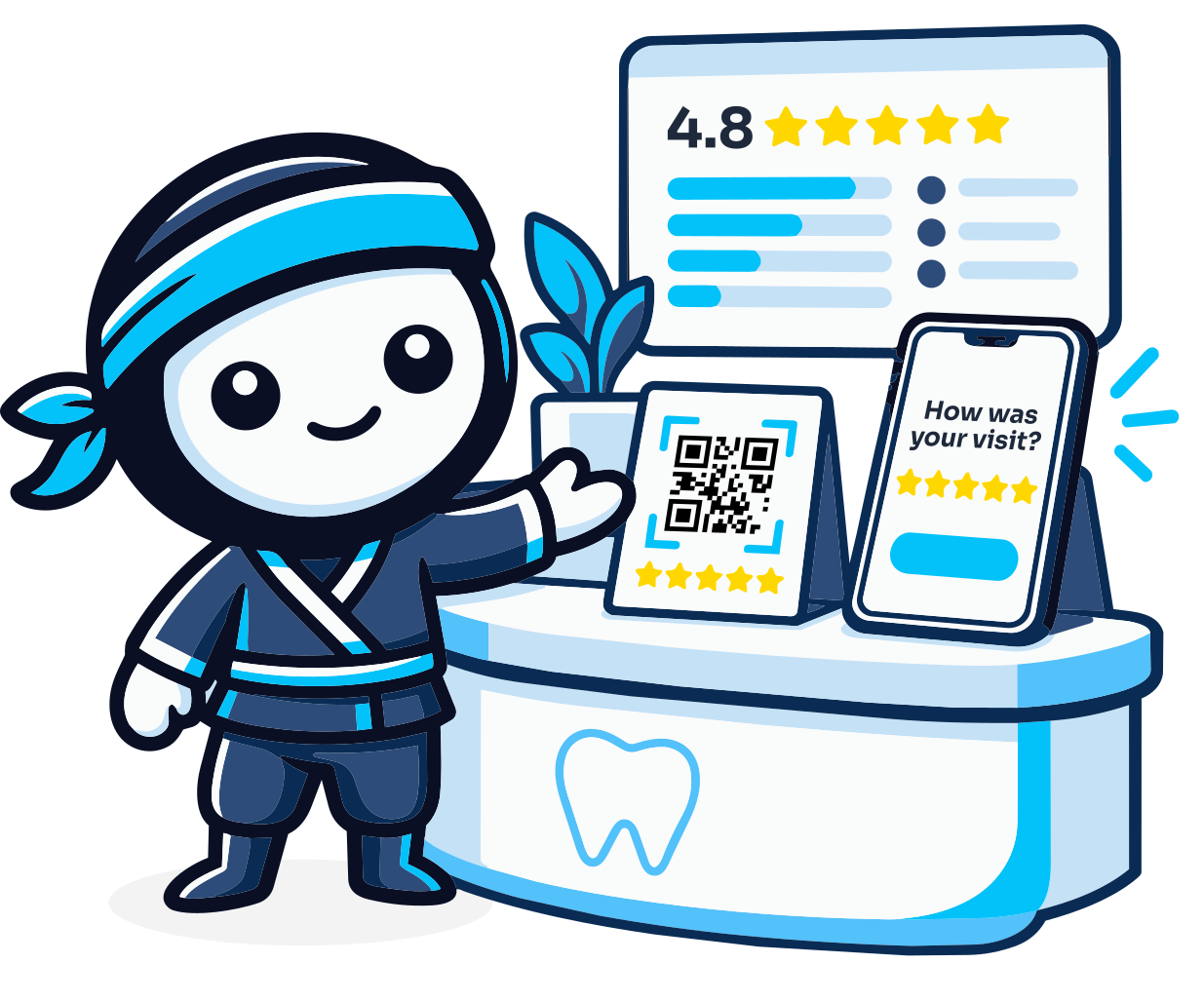

Quick Answer
What Is Dental Reputation Management?
Dental reputation management is the process of collecting patient feedback, monitoring public reviews, responding professionally and using recurring feedback to improve the practice experience. It can include Google review workflows, QR codes, email feedback and multi-location processes. Dental practices should use privacy-conscious responses and avoid confirming sensitive patient information in public review conversations.

The Problem
Why Dental Practices Need a Structured Reputation Process
Dental teams are busy with patient care and administration, so review requests and feedback often become inconsistent or reactive.
Satisfied patients may forget to leave reviews after an appointment.
Front-desk teams ask inconsistently or use different wording.
Negative experiences may first surface publicly.
Public replies can accidentally reveal sensitive patient details.
Different dentists or locations may follow different review processes.
Review links can send patients to the wrong practice location.
A clear, privacy-conscious process keeps feedback consistent and protects patients and the practice.

Why It Matters
Why Dental Reputation Management Matters
Build Patient Trust
Public reviews can give prospective patients additional context when evaluating a dental practice.
Improve the Practice Experience
Recurring feedback can reveal patterns around communication, waiting times, scheduling and front-desk service.
Strengthen Local Visibility
Google states that review count and review scores factor into local ranking alongside relevance, distance and prominence.
Set a Professional Response Standard
A consistent response framework helps practices acknowledge feedback without discussing sensitive patient information publicly.
How It Works
How Dental Reputation Management Works
Map Patient Touchpoints
Identify where feedback requests are suitable, such as after an appointment or in routine follow-up, subject to privacy and professional requirements.
Use Neutral Requests
Invite honest patient feedback without requesting a particular star rating or selectively targeting only positive patients.
Make Feedback Easy to Access
Use suitable email or QR-code touchpoints so patients can reach the feedback or review destination without searching.
Respond Carefully
Respond professionally to public reviews while avoiding confirmation of treatment, diagnosis, appointments or other sensitive information.
Improve the Practice
Look for recurring service themes and use them to improve patient communication, administration and the overall experience.
The TrustNinja Solution
Manage Your Online Reviews with TrustNinja
TrustNinja can support dental reputation workflows through its Email Signature Survey, QR Code Feature and review-management processes. Each practice should assess its own privacy, security, consent and regulatory requirements before using any third-party tool with patient-related information.
Patient Feedback Invitations
- What it is
- A structured way to invite appropriate patients to share genuine feedback.
- How it works
- Neutral requests are made after relevant interactions.
- Business outcome
- A consistent process that respects privacy and professional obligations.
QR Code Feedback
- What it is
- A scannable feedback touchpoint.
- How it works
- Placed in suitable, non-sensitive practice areas or patient materials.
- Business outcome
- Patients can share feedback without searching for the right profile.
Review Monitoring
- What it is
- An organised process for keeping public review activity visible.
- How it works
- Review activity is tracked in one place.
- Business outcome
- Keeps reviews visible without exposing confidential patient information.
Patient Experience Feedback
- What it is
- Structured feedback about the practice experience.
- How it works
- Feedback is collected at consistent points in the patient journey.
- Business outcome
- Highlights themes such as communication, scheduling and front-desk experience.
Reputation Management
- What it is
- A repeatable approach to public reviews and feedback.
- How it works
- Requests, monitoring and responses run as one process.
- Business outcome
- Consistency while maintaining appropriate privacy and professional standards.
Email Signature Survey
- What it is
- A feedback prompt in routine practice email.
- How it works
- Patients can respond from everyday communication.
- Business outcome
- A recurring feedback opportunity, subject to your privacy assessment.

Who This Is For
Who Can Use TrustNinja?
TrustNinja's review and feedback workflows may suit dental organisations that want a more consistent reputation process, subject to their privacy and professional obligations.
Independent Dental Practices
Create a repeatable feedback process without relying only on front-desk memory.
Dental Groups
Standardise review and feedback workflows across practices.
Orthodontic Practices
Collect experience feedback across longer patient journeys at appropriate touchpoints.
Cosmetic Dentistry Practices
Manage public reputation while keeping treatment details private.
Specialist Dental Practices
Use professional, privacy-conscious feedback processes.
Multi-Location Organisations
Direct patients to the correct location and maintain consistent response standards.
Compare
Manual Dental Reputation Management vs a Structured System
| Manual Approach | Structured Approach | |
|---|---|---|
| Review requests | Staff remember occasionally | Defined patient touchpoints |
| Wording | Varies by employee | Neutral standard wording |
| Location routing | Patients may find the wrong listing | Location-specific destinations |
| Feedback visibility | Reactive | Ongoing management input |
| Review replies | Depends on individual judgement | Privacy-conscious response guidelines |
| Scaling | Harder across practices | Repeatable across locations |
A structured process improves consistency, but healthcare privacy obligations still apply regardless of the software used.
