for Practices and Clinics
Healthcare reputation management should help practices listen to patient feedback without compromising privacy or professional standards. TrustNinja can support review and feedback workflows through email and QR-code touchpoints, while each healthcare organisation remains responsible for assessing the privacy and regulatory requirements of its intended use.
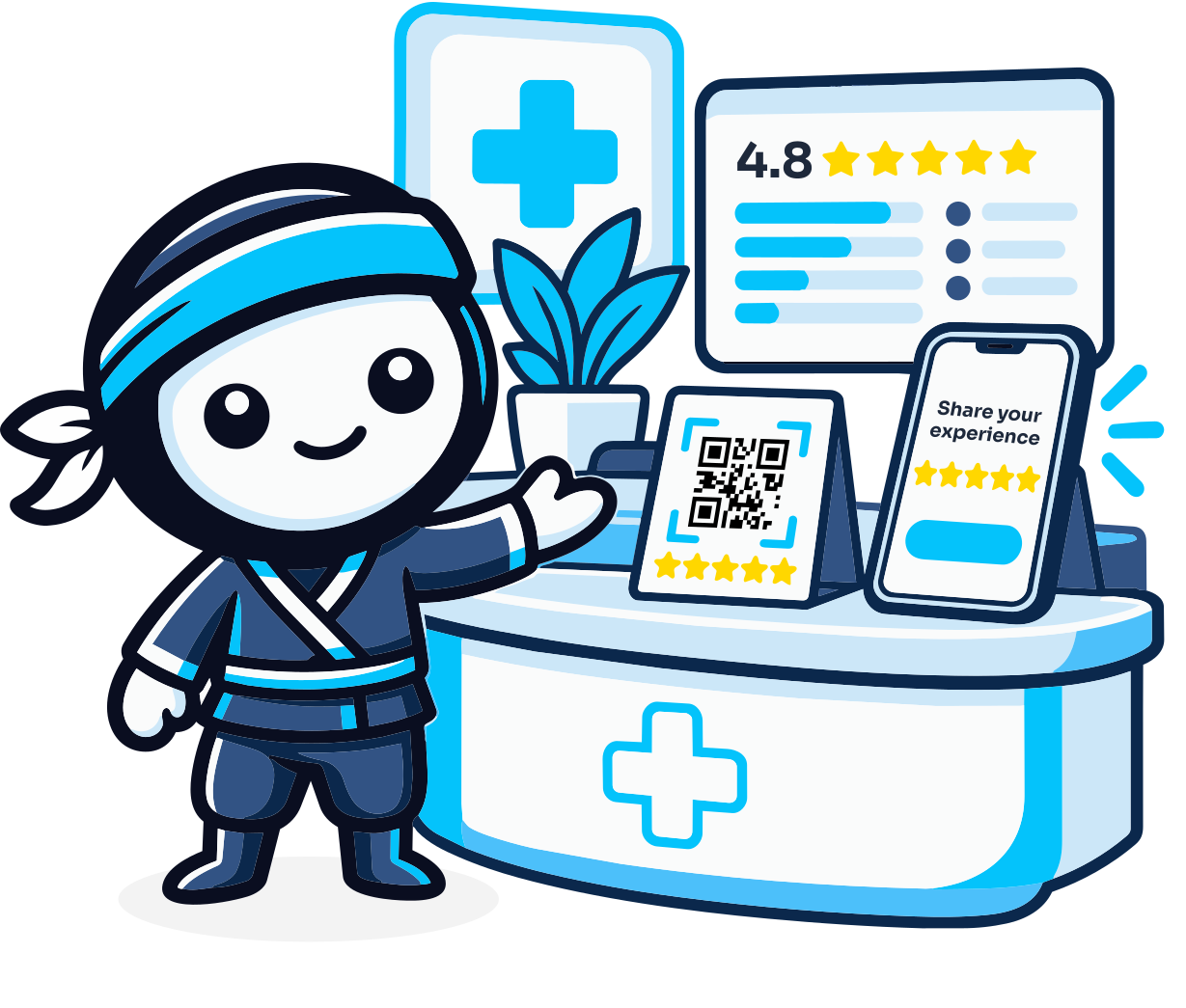

Quick Answer
What Is Healthcare Reputation Management?
Healthcare reputation management is the structured process of collecting patient experience feedback, monitoring public reviews, responding professionally and improving service based on recurring themes. It can include review invitations, QR codes, email feedback and multi-location workflows. Healthcare organisations should take extra care with confidentiality and avoid confirming sensitive patient information in public review responses.

The Problem
Why Healthcare Reputation Management Needs a Structured Process
Healthcare organisations need to balance patient experience, public reputation and privacy. A general-purpose review process can create risk if teams do not have clear rules.
Patients may not know the easiest way to share feedback.
Staff use inconsistent wording or timing for review requests.
Public responses can accidentally confirm sensitive patient information.
Negative feedback may reveal operational issues that need private follow-up.
Different practitioners or locations respond inconsistently.
Review requests become biased if only satisfied patients are sent to public platforms.
Clear rules for requests and replies let practices listen to patients without putting confidentiality at risk.

Why It Matters
Why Healthcare Reputation Management Matters
Support Patient Trust
Public reviews give prospective patients context, and professional responses show that feedback is taken seriously.
Improve Patient Experience
Recurring feedback can reveal themes involving communication, scheduling, reception, accessibility and other service factors.
Strengthen Local Visibility
Google states that review count and review scores factor into local ranking alongside relevance, distance and prominence.
Protect Professional Standards
A documented response and feedback process helps staff avoid ad hoc public conversations involving sensitive information.
How It Works
How Healthcare Reputation Management Works
Define Privacy-Safe Touchpoints
Identify when and where patient feedback can appropriately be requested under your legal, contractual and professional obligations.
Use Neutral Review Requests
Invite genuine feedback without asking for a specific rating, offering incentives or directing only positive patients to public reviews.
Make Feedback Easy to Access
Use appropriate email or QR-code touchpoints that reduce friction without exposing unnecessary patient information.
Respond with Confidentiality
Keep public responses professional and avoid confirming treatment, diagnoses, appointments or other sensitive details.
Turn Feedback Into Improvement
Analyse recurring non-clinical experience themes and use them to improve communication, administration and patient journeys.
The TrustNinja Solution
Manage Your Online Reviews with TrustNinja
TrustNinja can support healthcare feedback and review workflows through its Email Signature Survey, QR Code Feature and wider reputation-management process. Each healthcare organisation should verify security, privacy, data-processing and regulatory suitability before using any platform with patient-related information.
Patient Feedback Invitations
- What it is
- A structured way to invite appropriate patients to share genuine feedback.
- How it works
- Neutral requests are made after relevant interactions.
- Business outcome
- A consistent process that respects privacy and professional obligations.
QR Code Feedback
- What it is
- A scannable feedback touchpoint.
- How it works
- Placed in suitable, non-sensitive areas or patient materials.
- Business outcome
- Patients can share feedback without searching for the right profile.
Review Monitoring
- What it is
- An organised process for keeping public review activity visible.
- How it works
- Review activity is tracked in one place.
- Business outcome
- Keeps reviews visible without exposing confidential patient information.
Patient Experience Feedback
- What it is
- Structured feedback about the patient experience.
- How it works
- Feedback is collected at consistent points in the patient journey.
- Business outcome
- Highlights themes such as communication, scheduling and reception.
Reputation Management
- What it is
- A repeatable approach to public reviews and feedback.
- How it works
- Requests, monitoring and responses run as one process.
- Business outcome
- Consistency while maintaining appropriate privacy and professional standards.
Email Signature Survey
- What it is
- A feedback prompt in routine practice email.
- How it works
- Patients can respond from everyday communication.
- Business outcome
- A recurring feedback opportunity, subject to your privacy assessment.

Who This Is For
Who Can Use TrustNinja?
TrustNinja's feedback tools may suit healthcare organisations seeking a more consistent patient-experience and reputation process, provided the intended use passes the organisation's privacy and compliance review.
Primary Care and Medical Practices
Create structured patient-experience feedback around appropriate administrative and service touchpoints.
Dental Practices
Use privacy-conscious review and feedback workflows tailored to dental patient journeys.
Allied Health Providers
Collect service feedback while protecting confidential patient context.
Specialist Clinics
Standardise public-review responses and appropriate feedback requests.
Healthcare Groups
Create consistent processes across practitioners and locations.
Multi-Location Organisations
Use location-specific review destinations and central response standards.
Compare
General Reputation Management vs Healthcare Reputation Management
| General Business | Healthcare | |
|---|---|---|
| Customer context | Usually ordinary customer data | May involve sensitive health context |
| Public replies | Avoid unnecessary personal details | Avoid confirming patient status, treatment or sensitive details |
| Tool selection | Assess features and privacy | Deeper privacy, security and regulatory due diligence |
| Review requests | Neutral and incentive-free | Neutral, incentive-free and appropriate to professional obligations |
| Feedback analysis | Service improvement | Patient-experience improvement with confidentiality safeguards |
The underlying principles are similar, but healthcare needs additional privacy and professional safeguards.
